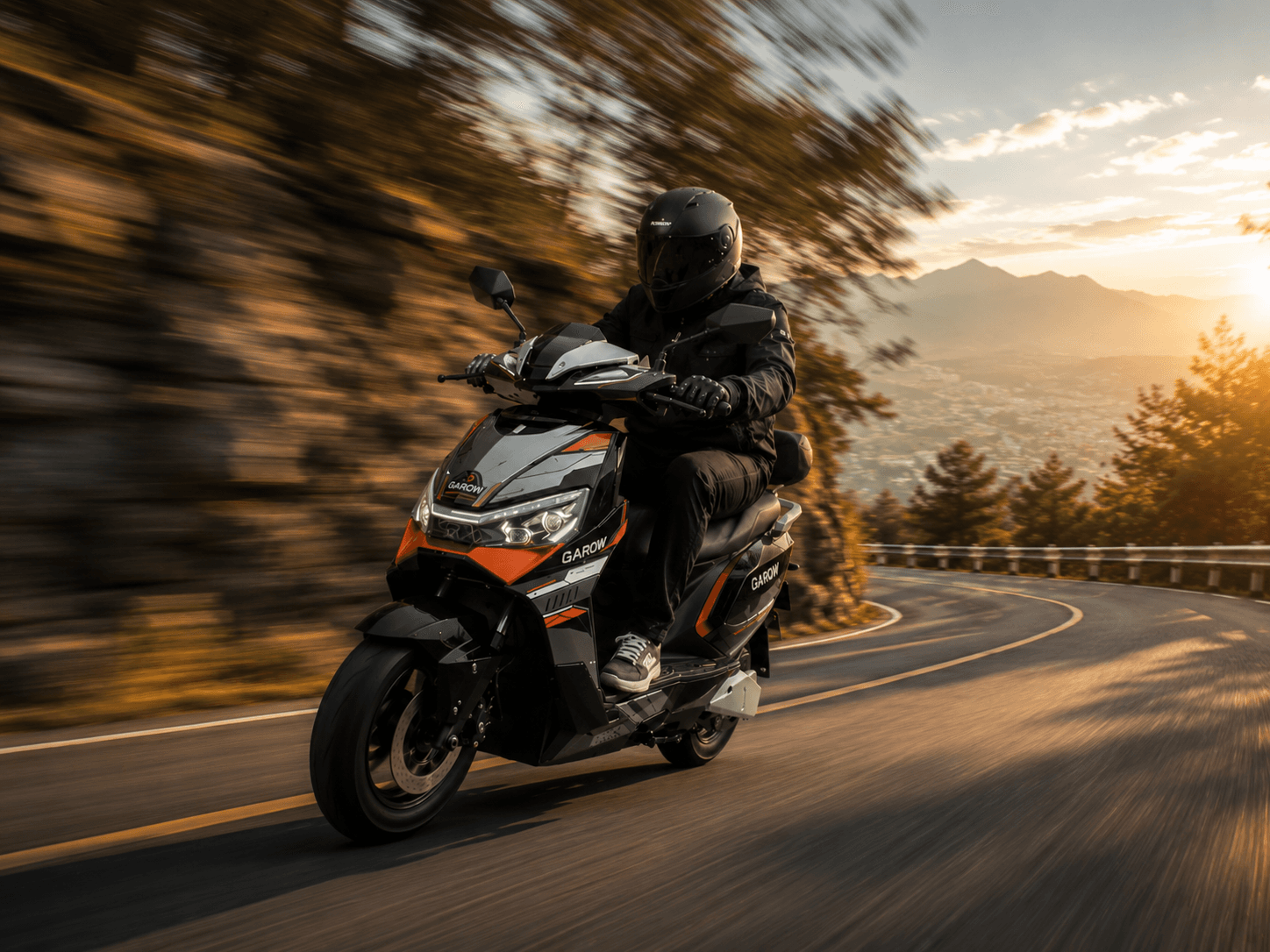
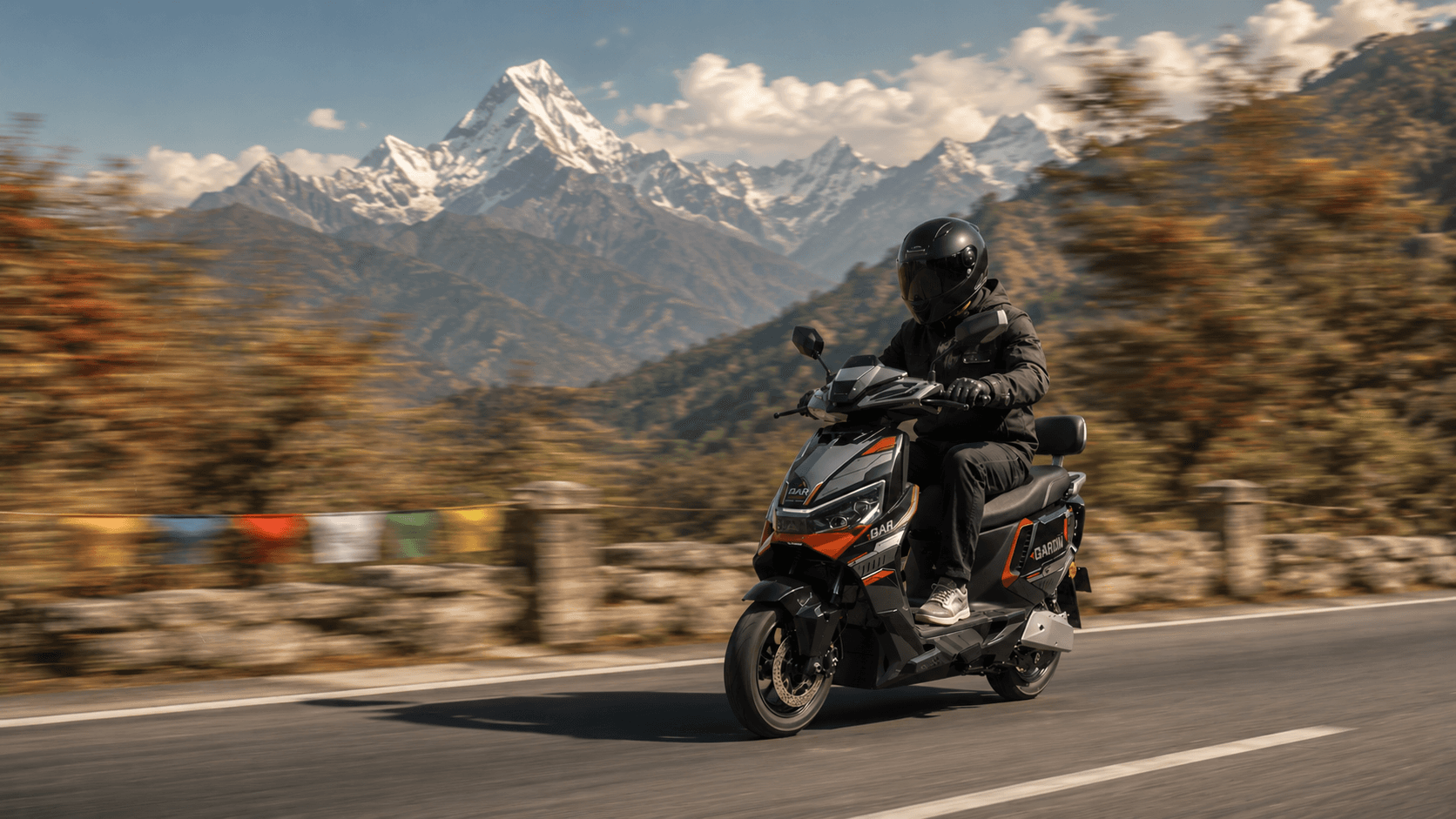
Why electric scooter range changes on Nepal's roads
A brochure range is a useful comparison point, but Nepal's climbs, temperatures and traffic can move the real number. Here is what changes range and what riders can control.
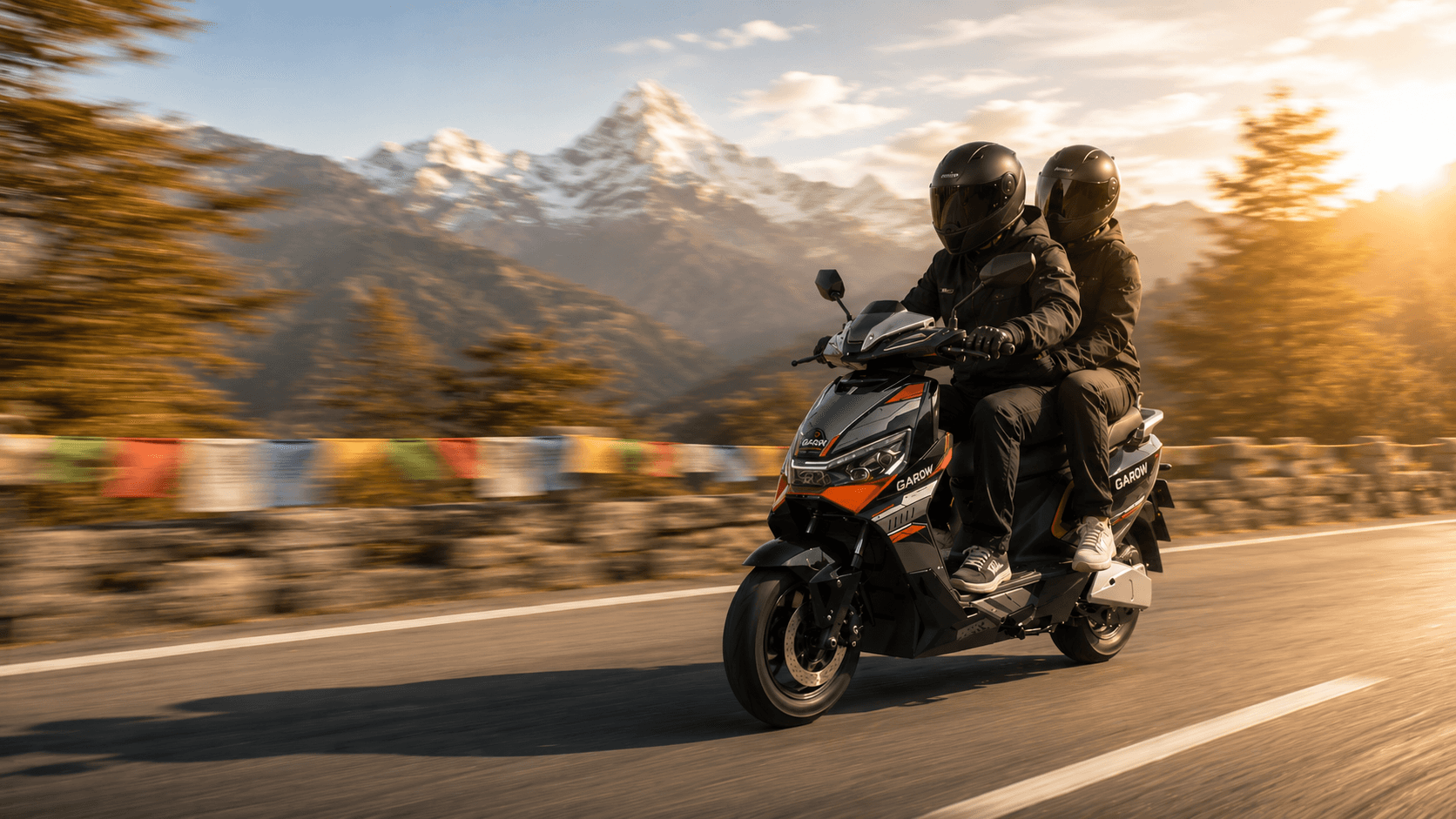
Published range gives shoppers a common starting point. It does not predict every trip. Two riders on the same electric scooter can finish the day with very different battery levels because speed, elevation, load and riding style affect energy use.
This is especially relevant in Nepal, where a route can move from slow traffic to a sustained climb in a few kilometres. Plan around your demanding days, not a perfect laboratory run.
Climbing converts battery energy into height
A motor works harder uphill. A steep climb with a passenger draws more energy than steady movement on a flat road. You may recover a small amount on the descent if the scooter uses regenerative braking, but the return is never equal to the energy used to climb.
If your commute includes a long climb, ask for a test route that includes an incline. Watch the battery before and after instead of judging only acceleration.
Speed has a bigger effect than many riders expect
Air resistance rises quickly with speed. Repeated hard acceleration also consumes more energy than a smooth throttle. Riding at a steady, moderate pace is usually the simplest way to extend a charge without changing the scooter.
Passenger and cargo weight matter
A second rider, delivery box or heavy load asks the motor to move more mass every time the scooter starts or climbs. Keep that in mind if you test alone but normally ride two-up. Tyre pressure should match the manufacturer's guidance for the load.
Cold batteries temporarily deliver less usable energy
Lithium battery performance can drop in colder conditions, particularly after the scooter has been parked overnight. The effect is more noticeable in colder hill areas than in a warm afternoon ride. Range generally improves again as conditions become milder; cold-weather loss does not automatically mean the battery is damaged.
Tyres, brakes and maintenance can quietly reduce range
- Low tyre pressure increases rolling resistance.
- A dragging brake turns battery energy into heat.
- Poor wheel alignment and worn bearings add resistance.
- Age and repeated charge cycles gradually reduce battery capacity.
- Unnecessary cargo adds work on every start and climb.
How to interpret Garow's range figures
Garow publishes up to 65 km for the DT-51 MAX, up to 100 km for DT-31A and DT-13B, and up to 300 km for the JJ2500DT-86. Treat those as model comparison figures. Your planning range should be lower and should leave a reserve appropriate to your route.
The DT-86's large 72V/110Ah battery gives long-distance riders more headroom. It does not remove the effects of hills, speed or load. That distinction makes the range claim more useful, not less.
Quick answers
Common questions
Do hills reduce electric scooter range?
Yes. Climbing requires more energy, especially with a passenger or cargo. A descent may recover some energy on scooters with regenerative braking, but not all of it.
Why is my scooter range lower in winter?
Cold conditions can temporarily reduce the usable energy and power available from a lithium battery. Tyre pressure can also fall as temperature changes, adding rolling resistance.